
TOP STORIES
-

Weekly Re-Up: Bieber Gets Sassy, Jay Z Catfishes Us & More -

Rick Ross Casually Admits CO Past He Denied for Years Was True -

Also Boobs: Here Are Some Pics of Rihanna Topless (NSFW) -

Find Her: Who’s the Girl in ScHoolboy Q’s “Man of the Year” Video? -

Porn Stars in Music Videos: An Absurdly Detailed Investigation

|
A Brief Analysis of Black Culture From The Native American PerspectivePosted by Jason James on 03/12/14 | Filed under Opinion, This Is My Rifle |

For quite a few years now I've been thinking about changing my last name.
The idea first occurred to me when my mom's brother committed suicide and my grandmother died a few months later from terminal cancer. My mom's father, James (also my middle name), had passed away when she was 16-years-old and so when my grandmother died, the last remaining link to what I considered to be my immediate family went with her. Shortly thereafter I decided to change my last name to my mother's maiden name- Wells- as a tribute to the people that I loved so dearly and held closest to my heart.
But then a conflict arose; Wells was not my grandfather's true name.
As a child my grandfather was sent to what we in Canada refer to as a "Residential School". These schools, if you can call them that, were boarding homes set up by the Catholic Church in conjunction with the Canadian government with the goal of assimilating Indian (or Native American for the politically correct) children into European society through strict religious indoctrination. At these schools, children were routinely abused, both physically and sexually, tortured and sometimes even murdered. It was at one of these horrific institutions that I believe my grandfather was given the name Wells- a British name randomly picked as a symbol of his entry into Christianity. In short, he was becoming what Catholicism would perceive as being a civilized savage- not quite one of them but close enough to ignore.
Upon coming to this realization I knew that finding his original name was going to be nearly impossible. Most of what was known about my grandfather's existence has disappeared and if I truly wanted to find his (my) name, I would have to backtrack through the Residential School's records, if there are any, and find it.
Since my initial understanding of just how daunting of a task it would be to find my grandfather's name I haven't done much to pursue it. First, it's entirely possible that the name Wells was forced upon his family even before he entered the living hell that was the Residential School. I'm assuming that the name was given to him at that time but there is also a possibility his family was given the name previously through another series of twisted scenarios. Secondly, I don't want to know what happened to him. I've never met my grandfather and I don't want my only memory to be of him as a child suffering through extreme levels of abuse at the hands of some sadistic piece of shit. I know my threshold and if I was ever within striking distance of anybody even somewhat affiliated with the Residential School system, no matter how old and decrepit, I wouldn't be able to catch myself.
There's a certain type of anger that burns inside of me when I think about what happened to those children. I can't explain exactly how it feels. Any type of violence towards any child for whatever reason is enough to send me into a murderous rage, but when I think about what happened to these children in particular it's different. I think it's because I identify with them. There's a piece of my spirit that cries out for them when I'm forced to confront it. Many times I've researched the history of my country, and many times I've welled up with an unbearable hatred for what my grandfather and so many other children like him had to endure.
Whenever I discuss the topic of race, I always find a unique parallel between the Native and Black American communities. Throughout history the two groups have been intertwined both accidentally and intentionally many times over. For example, in Louisiana runaway slaves would often retreat into the bayou where the Indian tribes lived and were provided with food, clothing, shelter and protection from the slave masters. It's because of this intermingling that many southern Black Americans have Indian blood in them to this day and traditional Indian dress is worn in Mardi Gras as a celebration of this union. Later on in the 1960's and 1970's the Black Panthers and American Indian Movement offered support to one another if and when it was necessary. They understood each other’s struggles and found themselves simultaneously engaged in battle against the US government and FBI. As a result of the links between both groups, AIM became the Native American arm of Fred Hampton’s Rainbow Coalition.
Even now the correlation between the Black and Native American communities is impossible to miss as a vast majority of Native American youth have adopted Hip Hop music into their own cultures. I myself am a clear example of this trend and I have comfortably lived within the boundaries of Hip Hop for over a decade. Furthermore, I have found that the connections I have created to numerous Native American youth would not be possible without Black music acting as a bridge between us. It’s through Hip Hop music that I am able to share my story, and if and when I am asked for advice my message never changes: NO EXCUSES. JUST BE BETTER.
I have the same sentiment when it comes to the discussion of political and social issues pertaining directly to Black Americans. Much to the disdain of White progressive liberals, I do not believe that slavery can be used as an excuse for the deplorable circumstances Black Americans continue to live within today. The “slave mentality” theory is, in my opinion, nothing more than a term used to patronize and victimize a group of people who are now nearly five generations removed from slavery. Whenever the subject of slavery* enters into the conversation, it is always used as a diversion away from the true underlying problems- issues that progressive liberals will always have difficulty addressing because they can’t approach them without bias born out of the all-too-familiar white guilt.
There are two major issues that I see prevalent within urban Black American communities: poverty and a lack of education. Coupled together, they are like the classic “chicken or the egg” riddle: where there is poverty there is subpar education, and where there is subpar education there is poverty. This continuous cycle gives way to a vast number of issues- first and foremost, the abuse and distribution of illegal narcotics.
As most of us already know, the CIA and other covert government factions were undeniably responsible for importing much of the cocaine into the poor Black neighborhoods of the United States throughout the 1980’s, and as a result, crack cocaine exploded in these areas. During this time, Ronald Reagan launched his now infamous “war on drugs”, which handed out unfathomably long sentences to drug offenders. While powder cocaine- a predominantly suburban White drug- carried a much lighter sentence, crack cocaine- a predominantly inner city Black drug- could virtually lock offenders away for 20 or more years.
It doesn’t take a genius to figure out why this happened. In the poor Black communities crack was going to have a sizable impact indefinitely. Due to its inexpensiveness, drug users- who are typically poor- would gravitate to it immediately and non-users- who also just so happened to be poor- would discover an opportunity to profit as distributors. As both users and distributors they would face lengthy prison sentences if caught in possession of the substance. Coincidentally, shortly after the crack epidemic made its debut, private prisons were introduced across America; institutions owned and operated by corporations and paid by the government for every prisoner confined within its walls. With incarceration becoming a business and corporations paying millions of dollars to lobbyists in Washington for strict drug laws and longer sentences, America’s prison population ballooned to a staggering 1.5 million people in 2012- most of them young Black males and many of them serving time for non-violent drug offences.
As young Black men were being sucked into the vacuum of America’s justice system, Black women were left to raise their children alone, and without a strong male presence in the home, many of these kids developed an even deeper set of problems than their fathers had before them. As somebody who was raised by a single mother myself, I can say that 100% of the issues I faced in relation to identity, insecurity and anger were the direct result of the lack of a relevant and positive male role model in my life during my formative years. I can assure you that where there is an absence of a parent in the household, most notably the father, problems will persist.
So as Black males were being systematically removed from society, and as the inner city public school system deteriorated dramatically due to budget cuts and various other factors, many of these kids began to drop out from a lack of interest and little hope of ever receiving a post-secondary education. Black mothers, sometimes working two or three jobs, were now unable to keep up with their children and most of them would end up back in the same exact cycle that swallowed their fathers in the previous years.
The reason why I’m writing this article today is because I see an even greater problem in Hip Hop than I have in the past. I know that there are a lot of young Black, Latino, Native American and even White kids that look to the artists for guidance, and we have reached a point in popular Hip Hop culture where the narrative provided above is celebrated rather than discouraged. We have a responsibility to these children and we are doing absolutely nothing to stop this cycle. I know that a lot of the bloggers and writers, many of whom are White, are apprehensive about speaking against popular Black artists for fear of alienation, but where are they leading the children that idolize them? Jay Z sells Samsung, Beyonce peddles Pepsi, but who is sharing freedom? We are inevitably creating a culture where the harsh realities of poverty have been discarded and replaced with glamorized tales of drugs and violence, where the virtues of education are traded for the handcuffs of consumerism and the value of life is determined by the price of the products we purchase. Hip Hop is no longer informative it is exploitative.
In closing I would like to share a message to the young readers out there:
Yes, racism exists and yes, inequality is very real. Some people may show you empathy or even sympathy, but when the chips are down they are going to exercise their advantages in every way they can, if they can. Nobody is going to give you anything. If you have to work twice as hard to travel the same distance as the guy next to you then work three times as hard. The world is an unforgiving place and it will not change unless you make that change happen yourself. There is a system that you are inside of and it’s always moving- it’s up to you to determine whether you beat it or it beats you.
NO EXCUSES. JUST BE BETTER.
*Click here to watch an amazing breakdown of slavery by Stefan Molyneux
(Jason James is an artist, freelance columnist and writer for RefinedHype.com. You can read/download his free eBook, "This Is My Rifle" and listen/download his most recent album, "Pyramids in Stereo". You can also contact him here and here.)
-
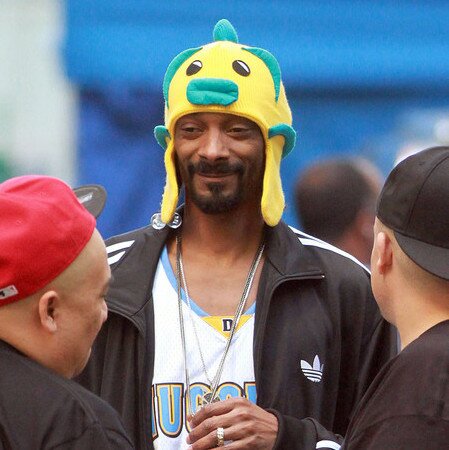 Rappers Wearing Things On Their Heads: An Absurdly Detailed Investigation
-
 Corporate America (& White People) Love Trap Music, Here’s Why
-
 The Curious Case Of Chamillionaire
-
 Lucas & Nathan Debate Skrillex ft. Chance the Rapper’s “Coast is Clear”
THE BEST OF REFINED HYPE



RefinedHype on Twitter
Tweets by @refinedhype