
TOP STORIES
-

What Rapper Represents You? (aka Your Hunger Games Rapper) -

7 Dope Underground Rappers You (Probably) Haven’t Heard Of Vol. V -

The Best Songs From Each Lil Wayne “Tha Carter” Album -

Those Naked Rihanna Face Down, Ass Up Pics Are Here (NSFW) -

Porn Stars in Music Videos: An Absurdly Detailed Investigation

|
When Thugz Cry: Stopping Little Pain & Sad Rap Before It StartsPosted by Dharmic X on 05/09/13 | Filed under Opinion, The Immersion |
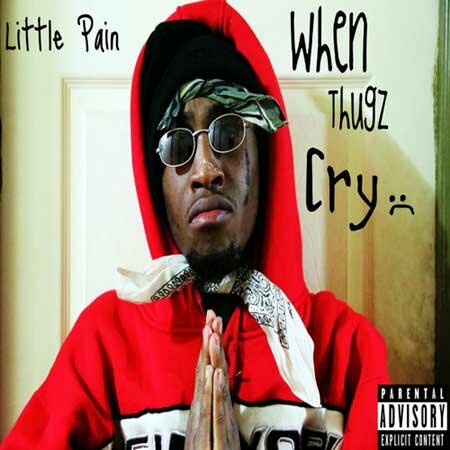
What sets hip-hop apart from other genres of music is its rough-and-tumble aesthetic that sometimes prohibits the display of real emotion. The idea that real men are not supposed to reveal feelings of hurt and disappointment is very much a part of broader society, but it is an idea that has been overemphasized amongst the hip-hop community for years.
That's not to say that nobody was rapping about emotions in the 90s. Scarface's "I Seen A Man Die" is a classic that serves as an adequate example. But it wasn't until the 2000s that the assumed stereotype of rap machismo was really tested. Acts such as Atmosphere and Murs, both of whom had been around for longer, began to really cultivate organic audiences in the underground circuit, primarily through extensive touring and word-of-mouth. Underground acts opened the genre up to a newer audience of listeners who appreciated the content and could not ordinarily relate to more conventional rap acts.
Meanwhile, on the mainstream side of things, the emergence and subsequent dominance of Kanye West opened the floodgates for others to follow in his footsteps. Kanye's background, upbringing, and style clashed with every accepted norm at the time, but it resonated and subsequently spawned the stylings of artists such as Kid Cudi and Drake.
At this point, Le1f is just as much an accepted part of hip-hop as Gucci Mane. Kitty Pryde may be hated, but she is embraced as an artist in the same genre that gave us the Remy Ma. The fact that the initial lineup for the New York leg of the Mobb Deep reunion tour was going to feature Waka Flocka Flame and Himanshu of Das Racist should speak volumes on the state of the culture in terms of what is acceptable in hip-hop these days.
Enter "sad rap."
This is the best source to go to for intimate details. To sum it up, "sad rap" appears to be the creation of a rapper from Brooklyn roughly my age, whose goal is to get fans and a community to embrace sadness. Or something like that.
The self-created subgenre is not marked by the production, or even the emcee's flow, both of which are standard fare. Instead, it is marked by a blunt acceptance of sadness: the sound of crying in the background throughout, lines embracing being "the saddest out." This music is nothing more than the glorification of sadness.
The existence of such a subgenre is repulsive.
First of all, to boast about sadness trivializes the serious issue of depression that the hip-hop community needs to address at some point. Being a part of the music industry breeds depression, with every rapper, producer, DJ, and journalist competing over a niche market and audience in a cutthroat setting. Money and fame can come and go in a heartbeat, and public reputation (ie. what others think about you or say about you behind your back) matters almost as much as results.
At best, making music with an over-the-top expression of "sadness," without ever defining the traits of sadness beyond tears and being broke, is a morbidly twisted form of laughter therapy. At worst, it is condescending towards people within the hip-hop community who are battling with feelings of anxiety and depression, beyond being a little "sad."
It upsets me that a rapper from Brooklyn would make music that belittles those who fight with actual tormented emotions, considering that one of Brooklyn's brightest stars-in-the-making, Capital Steez, was unable to conquer his demons, committing suicide less than six months ago.
Being sad is not a fucking joke.
My connection to hip-hop, especially in the last five years, has been instructive and cathartic. Hip-hop has shown me the pitfalls of vice and revealed the traits that I need to embody to live a better life. Listening to the right music steered me away from stupid shit that I was doing. In the darkest moments, I would listen to music from emcees such as Royce da 5'9", Vinnie Paz, and Black Thought. Not only did these emcees display proficient skill and lyrical craftsmanship, they were able to touch the emotions of pain and hardship with conviction and depth. Their attempts at introspection unveiled the brutal truth of their lives, which forced me to examine mine in a similar manner.
I've never been a fan of Drake's level of emotional songwriting, despite my affinity for hip-hop that delves into emotion. To talk about emotion, there has to be a level of authenticity, for starters. Beyond that, a lot of Drake's music sounds like whining. There is an absence of accountability in the music. The furthest he can go is to offer a tepid apology, and then his ego is back in control, excusing himself for potential transgressions.
Everyone can agree that DMX might be one of the most messed-up individuals of the hip-hop community, but DMX's no-nonsense approach extends to his own actions. He is aware that his own flaws as a man have brought him to the precipice, which he stresses in songs like "Slippin". It's songs like that which I appreciate more, because in it there is the ability to address ones own shortcomings before moving on.
Ultimately, music that influences thought and action stems from emotions that are more complex than simply "sadness." As humans, our brains and minds process emotion on a deeper level. This apparent "sad rap" trend simply cannot go that far with its shallow sense of expression. Coupling the shallowness of the content with the production being used, one could infer that the music is being made for simple enjoyment and partying. It is a terrifying feeling to know that while millions of people struggle with overcoming the pain of depression and other issues, other members of human society can celebrate that same pain without thought.
RefinedHype has merged with The DJBooth. It's the same articles you loved on RefinedHype, new address. For more info, check out the official announcement.
See Also: The Immersion: Hearing Screams With Chance the Rapper
See Also: The Immersion: Paying Attention to Wale
-
What Rapper Represents You? (aka Your Hunger Games Rapper)
-
7 Dope Underground Rappers You (Probably) Haven’t Heard Of Vol. V
-
 The Rap Soundtrack to My Life - What’s Yours?
-
 Teach Me To Love Dipset
blog comments powered by Disqus
THE BEST OF REFINED HYPE



RefinedHype on Twitter
Tweets by @refinedhype